
Cellframe Worklog: October 2025 Highlights
Category: Development Report
Hello everyone!
October was a busy month: the Cellframe team rolled out several important updates and fresh improvements.
All the most important highlights are already in the new worklog!
Web Development
Cellframe Auction
The auction service consists of two parts: a decentralized component built into the SDK, which handles token locking: receiving and returning bids, as well as tracking events and statistics (essentially functioning as an extended and more advanced form of staking); and a centralized component implemented as a Python plugin with a web interface, which manages the creation, execution, and cancellation of auctions and determines the winners.
In October, the plugin was fully migrated to an event-driven architecture, which made the bid-processing system cleaner and more efficient. Database operations were optimized as well: all queries are now asynchronous, allowing the plugin to run quickly and without delays.
The plugin’s API for interacting with the web backend was expanded, and event handling was unified under a single event processor. This ensures that all actions recorded on the blockchain (such as auction starts or bids) are reliably reflected in the database without duplicates or conflicts.
The stop-transaction scheduler is now synchronized with node startup and supports schedule recovery. Even after a node restart, it cross-checks the data and automatically generates any missed stop events to ensure auctions complete correctly.
Сellframe DEX
In October, the team focused on refining the internal logic and stability of the DEX. We implemented and improved several key components that directly affect the reliability of the exchange and the overall user experience.
We introduced a decree-based system for managing service fees, making the fee mechanism more transparent and easier to control. New commands for market analysis and trade data output were also added, expanding the set of tools available to users.
The DEX verifier, the component responsible for validating exchange transactions, was updated as well. Its architecture and fee-processing logic were redesigned, resulting in greater reliability and more predictable system behavior.
In addition, we optimized the order compilers by improving the logic for canceling, aggregating, and processing different types of operations. These include order creation, updates, cancellations, purchases (both partial and full), as well as a special subtype used to create a new order for the buyer’s remaining change after a full purchase. Each operation type now has its own dedicated compiler.
This approach made the exchange process noticeably faster, more accurate, and more stable. We also optimized token-pair handling through caching, significantly reducing system load and improving response times during operations.
Together, these updates mark an important step toward further developing the DEX infrastructure and building a more resilient, high-performance exchange module within the Cellframe ecosystem.
Cellframe Wallet
In October, the team continued actively developing and improving the Shared Funds functionality.
We refactored and updated the transaction logic: unnecessary commands were removed, and wallet data requests were optimized, reducing the load on low-powered devices and improving overall performance.
We also implemented full page flows for creating accounts, depositing, withdrawing, and canceling transactions, along with fixing issues related to UI display, validation, and element animations.
In addition, we focused on enhancing the user interface: tooltips, placeholders, context menus, and scrollbars were refined, new animations were added, and visual consistency on both Android and iOS was improved.
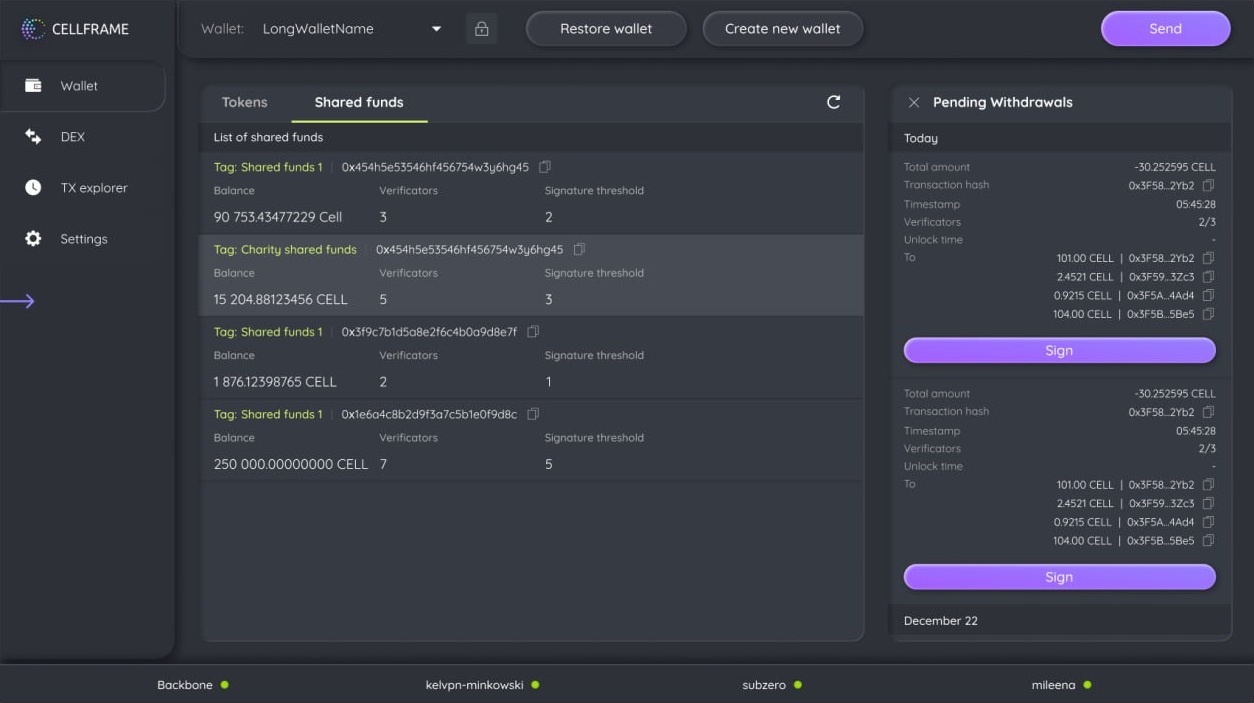
These updates aren’t in production yet, but they will be included in the next Cellframe Wallet release.
A strong focus was also placed on bug fixing. Crashes related to multisig, bridge transactions, and transaction history were resolved, along with issues in memory management, array indexing, and thread safety.
Сellframe Node & SDK
Key updates to the node’s architecture and functionality in October focused on the auction service. As mentioned earlier, it consists of two parts: a decentralized component, responsible for token locking and unlocking (part of the SDK and implemented on the blockchain), and a conditionally centralized component (a Python plugin with a web interface that manages the auction process). Since the correct operation of token locking depends on the data provided by the plugin, we developed new mechanisms for registering and storing service events on the blockchain. These mechanisms ensure a stable and reliable connection between the two parts of the service.
This new architecture solves a long-standing challenge: services can now safely store their data on the blockchain and work with it directly. Previously, centralized modules relied solely on local databases or GDB clusters and lacked convenient tools for monitoring data at the blockchain level.
We implemented two key mechanisms:
• Updated ledger event storage.
Its architecture has been redesigned and enhanced with a special layer for service events: specific data embedded in transactions that services use to track their processes. Each event now includes a group, type, and service ID, allowing information to be accurately recorded and processed independently of the main blockchain operations. This simplifies and organizes data storage and request handling for services.
• New system of service decrees.
To support this system, a service ID was added to the binary event format. This allows events to be precisely identified, verified within the service, and managed through a unified decree mechanism across all ecosystem services.
The system is already in use in the DEX module, where fees are set via decrees. This has improved the operation of our exchange, making it more flexible, secure, and resilient to errors.
In October, Node version 5.6 was released, with a focus on security and performance. We fixed issues with unsafe group deletion in MDBX, conducted stress tests to ensure GDB stability under heavy load, resolved uncontrolled database growth, and optimized driver performance.
To further enhance transaction security, protection against erroneous transfers was added: the system no longer allows tokens to be sent between networks that are not connected via the bridge. Such operations are now blocked, preventing potential loss of funds.
CLI functionality was also improved: lists now support pagination and filters, transaction history displays correctly, parameter validation was strengthened, and error codes were unified — all of which significantly improve usability and reliability of the tool.
Other Activities
The team continued sharing important updates: we reported on the investigation into the issuance of illegal mCELL tokens and the initial measures taken to protect the interests of legitimate validators. The investigation is ongoing, and we will keep the community informed.
In October, an interview with Alexey Yusupov, CBDO of Cellframe, was released, providing an in-depth look at Cellframe hardware nodes: from the initial concept and development to the current state and future updates.
At the end of October, the team attended one of the largest crypto forums of the year: Blockchain Life 2025. The event included key meetings, experience sharing, and discussions on current trends in the crypto industry, including preparations for D-Day. Details and thematic threads can be found in our post.
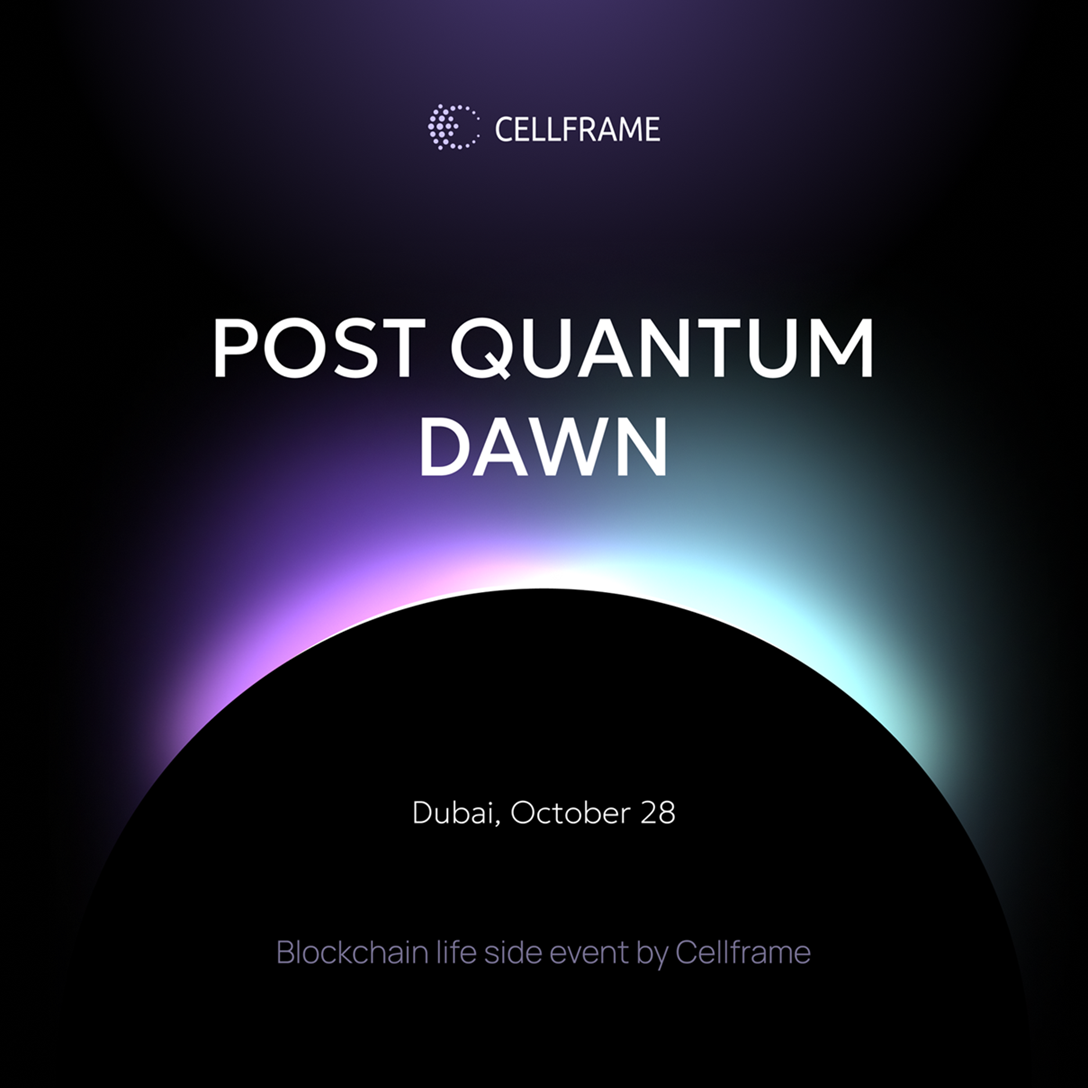
During the forum, we also hosted our first exclusive side event, Post Quantum Dawn, in Dubai. Panel discussions covered the future of blockchain after Q-Day, the development of post-quantum cryptography, and the role of AI in next-generation blockchains. Participants enjoyed live interactions, hands-on sessions, and exclusive insights. The event was sponsored by the Bitcointry exchange.
If you missed it, you can watch the recording here and read our recap. Post Quantum Dawn is coming.
On October 23, the traditional AMA session with Project Lead Dmitry Gerasimov took place. He answered pre-submitted and live questions from the audience. The recording is available here, and the full AMA transcript can be found here.
We continue to share news and engage the community in ecosystem initiatives: stay tuned, there’s much more ahead!